
Black Stereotypes You May Not Have Noticed
- Human Central
- Feb 2, 2022
- 8 min read
By: Bethany Milner
Turn on the TV. No, really, turn on the TV. Go to any channel, go to Netflix, Hulu, whatever. Do you see yourself? Do you see yourself accurately represented with numerous storylines? Do you see yourself as a vampire? A space captain? Or are you an everyday teen figuring out the mysteries of your small town?
If you have said yes to any of these questions, then you’re probably white. Don’t get mad, just listen. Ask any person of color if they can turn on the TV and see themselves on screen as anything they could ever dream of. I can guarantee you that 99% will say no. BIPOC has no representation in media. Whenever we do get representation, they are usually a stereotype while the white main characters are anything they want to be. I know what you may be thinking, “Bethany, what are you talking about? That is so not true!”. Well, Sally buckles in because I’m about to show you what people of color have been trying to say for the longest.
There are many stereotypes Black people are forced under in media. These stereotypes include the mammy, the sassy black friend, the helpless, the thug, the strong black woman, and many more. In this article, I will focus on these 5 since these are the ones I have seen the most in media.
1. The Mammy

Hattie McDaniel (right) won an Oscar for her role in ‘Gone with the Wind’ with Vivien Leigh (left). Selznick International Pictures
The mammy (sometimes spelled like Mammie) is the caricature of an old dark-skinned black woman. The role of the mammy is to comfort the white main characters to instill hope and be mentors to them. Prime examples in media include Mammy from Gone with the Wind, Aibileen and Constantine from The Help, and most famously, Tyler Perry’s. The mammy stereotype dates all the way back to slavery. The mammy was submissive, content, and happy being a slave. She was extremely loyal to her white “family” and fully neglected her own. Her role as a surrogate mother to her masters was more important than being a mother to her own children. Opposite of the Jezebel stereotype, the mammy is
completely desexualized. This further pushes the narrative that fat, black women are unattractive and unworthy of romantic love. Their only purpose is to serve their white friends as caregivers and nurturers.
Especially in today’s society, you see this gross obsession with older black women. White people automatically think that since they are old black women, they are nurturing and kind and will drop everything to help them---fulfilling the mammy stereotype. An article written by BBC talks about Ma. The article essentially talks about how the movie subverts the mammy stereotype and how much it damages black women.
Great read if you want to know more: https://www.bbc.com/culture/article/20190530-rom-mammy-to-ma-hollywoods-favourite-racist-stereotype
2. The Black Best Friend
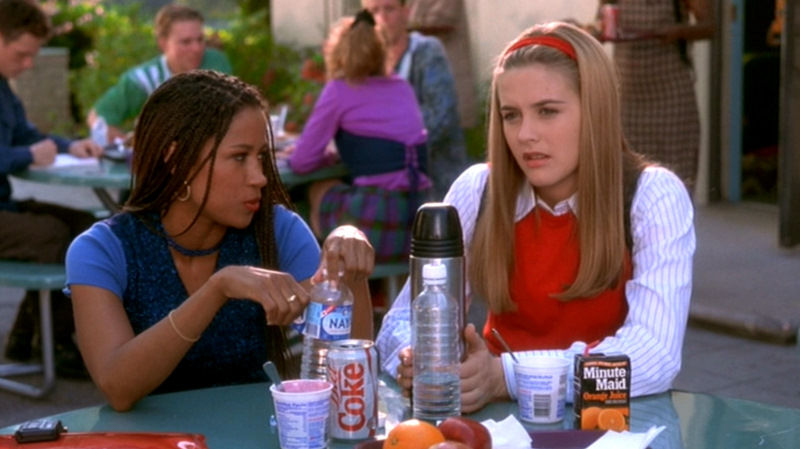
Movie: Clueless
The black friend trope in media, in my opinion, is the most damaging and most prominent trope. The black best friend has no role outside of helping the white main character. Once they are deemed useless, they are not important anymore. Roz and Ambrose from Chilling Adventures of Sabrina, Taylor from High School Musical, Dionne from Clueless, Flynn from Julie and the Phantoms, Mercedes from Glee, Kourtney from High School Musical: The Musical: The Series—the list goes on and on. Whenever the white main character has a problem, the black best friend somehow knows exactly what to do or they have the skills to fix the problem, skills that were never brought up until the problem arises and are forgotten after the problem is fixed.
Not only are the black best friends a savant at whatever the white main character needs them to be, but they are also always there for them. No, literally. ALWAYS. I know what you might be thinking, “Bestie, that’s a good thing…”. Yes, I know. Loyalty is a great quality to have in a friend. However, the loyalty that the
black best friend is expected to have is at a completely different level than their white counterparts. Frankly, the main reason why the black friend is so loyal is that they have no storyline outside of them helping their white friend. They are always there as a shoulder to cry on, a fixer to their problems, or to crack a SaSsY jOkE. Yes, that was sarcasm. Another level to the black best friend is the sassy black friend. The sassy black friend is always dressed in funky clothes and bright colors and is always so funny. Whenever there is a heavy situation, the sassy black friend is always there to lighten the mood with a joke-filled with AAVE and finger snaps.
This stereotype, like the mammy stereotype, forces black people to be good at everything and to take on their white friends’ problems. Black friends are not allowed to have their own emotional baggage. They can no longer take care of themselves first. The white friend comes first.
3. The Helpless

Sandra Bullock and Quinton Aaron in The Blind Side
You remember The Blind Side, right? The movie where Sandra Bullock saves the poor, defenseless black boy from poverty to play football. Makes you cry every time, right? Yeah, it gets me too. I just find it so sad how so many white people think it is a good movie and an accurate representation of how black people want to be treated. Yes, I know it’s based on a true story. But still, it is giving very much white savior. The whole point of the helpless black character is to make white people feel better about themselves and to give them someone to relate to. Whenever there is a movie about racism, white audiences get a little uncomfortable. They usually feel guilty because the only representation they see
on the screen are evil and dangerous and villains – sound familiar? But, whenever that white savior comes out and saves the day they can finally be like, “OMG! I would be just like them. I could never even imagine being racist to those blacks-- I MEAN… poor African-Americans!”. Their white guilt is lifted with
this character. Most race movies have a white savior, even if you don’t see it. Some examples are The Help and Freedom Writers. Now, Freedom Writers used to be my favorite movie. But when I actually paid attention to the message and the harmful stereotypes the movie was perpetuating, the movie was ruined. I legit cried. That movie is the legit embodiment of the white savior trope and the helpless black kid stereotype.
This stereotype has led white people to believe that black people need to be saved and white people are the only ones who can do it. With the recent rise of “wokeness” in the white community, the white savior trope has become a lot bigger. White people are now speaking over BIPOC whenever racial issues
are brought up and butting into spaces where they are not needed or wanted.
Prime example: MISSION
TRIPS! No offense to anyone who has gone on a mission trip but please stops. You’re doing more harm than good. Also, stop posting African children eating on TikTok…
4. The Thug

Movie: Training Day
When you imagine a gang member or a pimp or a thug, what do you see? It’s okay, this is a no-judgment zone…
You saw a black guy, didn’t you? RACIST!!! I’m just kidding—not really. The reason why you automatically thought of a black man was because of racist stereotypes perpetuated by white people and the media—which is run by white people. The only roles black people get, more specifically black men, are “the thug”. Their main hobbies include selling drugs, pimping out girls, and being abusive fathers. This role is the only role where you will always see black people.
You see this role in cop shows, like Criminal Minds and Law and Order, superhero shows, and mostly in movies that are targeted to black audiences. Yes, I know that hood movies are supposed to be relatable to black people. I think every type of person should see themselves realistically on screen. The problem I have with them is when white people or non-black POC watch the movies and think all black people are like that. Then, they try to act like those stereotypes to be cool and be “black”. I’m sorry, John, but listening to NBA Youngboy and smoking weed will not make you black. And Emma, using AAVE, doing your edges, wearing acrylics, and fetishizing black men won’t make you black either. I’m talking to you WoahVicky.
Nevertheless, the thug stereotype does more harm than good in any context. I’m not saying you can’t watch Boyz N the Hood, #RIPRICKEY, but make sure you understand the message you’re receiving.
5. The Strong Black Woman
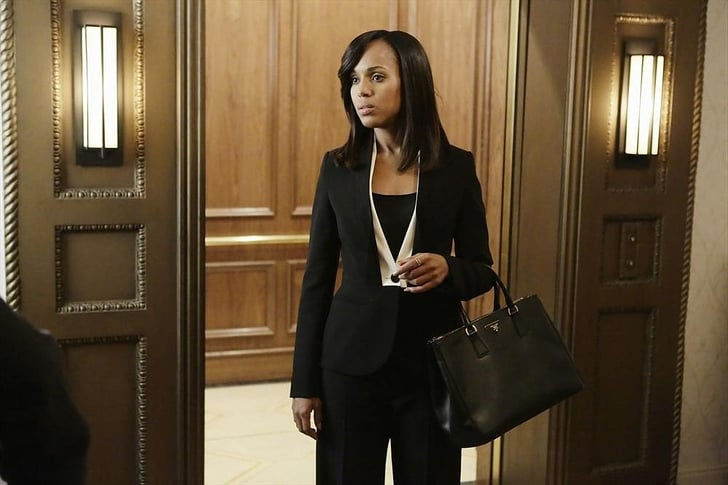
Show: Scandal (ABC)
Last on our list is the Strong Black Woman. This might sound like a compliment, you know, who wouldn’t want to be strong? However, being strong and being expected to be strong are two different things. Black women are expected to be strong, no matter what. But they can’t be “ghetto” when they’re being
strong. Let me explain: Whenever a white woman is outspoken and won’t take anyone’s mess, she is strong and confident. But, whenever a black woman does it, she is seen as loud and ghetto. The ghetto black girl is the most common stereotype for black women. To go against that, the strong black woman
was “created”.
This trope features characters such as Annalise from How to Get Away with Murder, Olivia Pope from Scandal, and Miranda Bailey from Grey’s Anatomy. The strong black woman isn’t emotional, she’s level-headed. She knows exactly what she needs to do at all times. She’s Superwoman. This stereotype is damaging because it forces young black women to grow up fast and be more mature than everybody else. This feeds into the role black girls take into the household. They are expected to cook, clean, wash, and take care of their siblings at a young age. They essentially have to be the mothers at the old age of 12. Black women are put under so much stress to be these Superwomen that it can affect our health. An
the article further explaining this will be listed in the sources below.
Purpose: The reason I am talking about this is that we need writers, directors, showrunners, casting directors, etc. to hire black people for roles that don’t have them in harmful stereotypes. For once, I would like to see a show where the main character was a black girl just being a black girl. Not a slave, not a civil rights
leader, not a drug addict, not a single mother, not the best friend—just a black girl. There are thousands of shows where most, if not all, of the cast is white and it’s about the craziest things. Do writers not think people want to see a black vampire or a black pirate? Why whenever a show comes out the main
characters have to be white? Black people exist out of these boxes white people have forced them into. I can’t even think of a black girl character that acts like me on the screen and has an actual storyline outside of their white friend. So, listen up TV/Film industry…. IF THEIR RACE DOESN’T MATTER TO THE PLOT, CAST A PERSON OF COLOR!
Definitions:
1. BIPOC stands for Black, Indigenous, and People of Color
2. AAVE stands for African American Vernacular English. In basic terms, it is basically the language
black people use to speak to each other.
3. A white savior is a white person who helps non-white people in a self-serving way.
Sources and More Information on These Stereotypes:
“From mammy to Ma: Hollywood’s favorite racist
“The ‘Strong Black Woman’ Stereotype Is Dangerous”: https://www.teenvogue.com/story/strong-black-woman-stereotype-oped
“How the “Strong Black Woman” Identity Both Helps and
“The Strong Black Woman Trope, Explained”: https://www.youtube.com/watch?v=rSjs_pm8MZk
“Mammy, Jezebel, and Sapphire: Stereotyping Black women in media | The Listening Post (Feature)”: https://www.youtube.com/watch?v=2teqoyPe3TU
“What is Ebonics (African American
“What is a white saviour complex?’: https://metro.co.uk/2019/03/06/what-is-a-white-saviour-complex-8793979/

Comments