
WHERE FEMINISM HAS STRAYED
- Human Central
- Sep 2, 2021
- 8 min read
Updated: Apr 4, 2022
By: Riley Weed
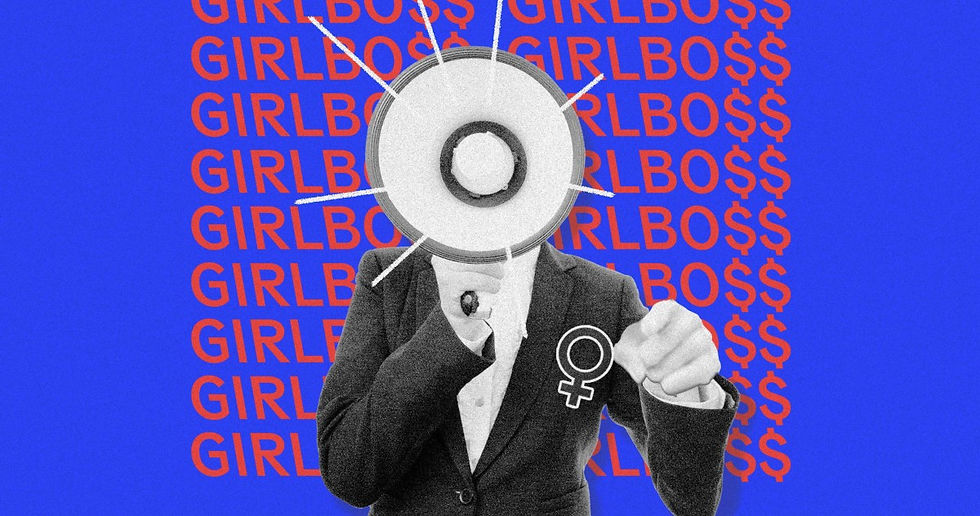
As adolescents scroll through social media today, they may find their feed full of images poking fun at the term ‘girlboss’ or using it ironically. Today the term ‘girlboss’ is used most often in a joking manner. Some people may call each other ‘girlboss’ as a joke, but why is that word something to poke fun at? Why has this word shifted from seriousness to irony? Feminism is a movement that has been prevalent throughout history. There have been three to four waves of feminism, all with different ideas. However, not all movements have stayed true to feminism’s values.
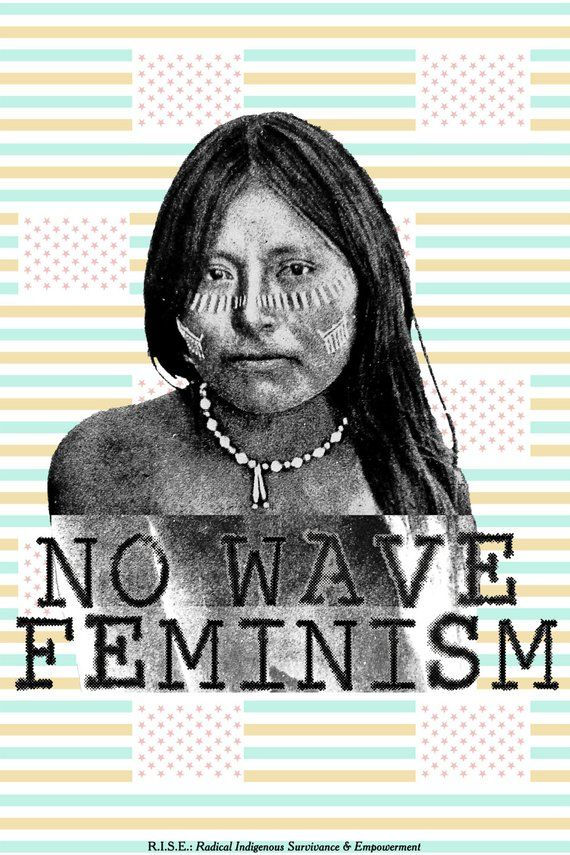
These stray movements include ‘girlboss’ and modern liberal feminism. These two movements are very similar and can easily be grouped together. Both movements are considered late-third wave ideas, though they also take inspiration from second-wave ideas. They both focus heavily on equality through individual enlightenment and success within a social framework. It can be argued that these movements allow for women to rise in corporations and inspire other women to enter careers that are predominantly male-dominated. However, ‘girlboss’ and modern liberal ‘feminism’ go hand-in-hand with an ignorance of the patriarchy, and these destructive movements only account for wealthy white women, causing the actual oppression of women of color.
Feminism Background
Sally Ann Drucker at Ohio Humanities defines feminism as the “political, cultural, and economic movements that aim to establish equal rights and legal protections for women” (Drucker). First-wave feminism took place from the 19th century to the early 20th century. It was focused on gaining the right to vote for women ending when the 19th amendment was passed.
Second-wave feminism was at its peak through the 1960s and 1970s. This wave's main concern was women’s liberation as well as equal legal and social rights. It’s known for encouraging women to understand the parallels between their personal life and sexist power structures. However, it is notorious for being mainly exclusive to upper-class white women. Finally, third-wave feminism, beginning in the 1990s, was a continuation and reaction to second-wave feminism. It responded to the failures and backlash of the previous wave. Third-wave feminism is said to be more inclusive and international than any other wave (Drucker). ‘Girlboss’ and modern liberal feminism began in the 2000s, making it a third-wave movement. However, these two movements really go back to a lot of second-wave theories. ‘Girlboss’ feminism was born through the work of Nasty Gal CEO Sophia Amoruso and is defined as encouraging corporate-focused individualism and success within male-dominated industries (Ruffolo). Modern liberal feminism is defined through its focus on achieving gender equality through political and legal reform within a liberal democracy (Wikipedia). Both of these movements blatantly ignore or even choose to embrace the patriarchy.
This is incredibly damaging and a very unfeminist idea. The patriarchy, defined by Wikipedia, is, “a social system in which men hold primary power and predominate in roles of political leadership, moral authority, social privilege and control of property” (Wikipedia). Merriam Webster adds on to this definition by stating that broadly it is defined as, “control by men of a disproportionately large share of power” (Merriam Webster). To combine these two definitions, I will be referring to the patriarchy as the social system in which the United States has been built upon that gives men more power and authority over society than anyone else.
The Patriarchy and "Sex Work"
Modern liberal feminism and ‘girl boss’ feminism has damaging views towards the patriarchy. They choose to ignore and embrace the patriarchy, denying that anything has to change in our society.
Modern liberal feminism goes back to the second-wave ideal of choice. However, this definition of choice has now been altered in order to cling to the patriarchy.
Modern liberal feminism is very much focused on reclaiming words like ‘whore’ or ‘slut’ and a push for women to choose to make money through some sort of sexual manner. This new definition supposedly empowers women by allowing them to make the choice to use their bodies for their own gain. However, what these women are really doing is choosing to contribute to the patriarchy. Author and journalist Julie Bindel explain this well stating, “Things that are currently classed as empowering women include: buying unbearably high shoes, pole-dancing as exercise, breast enhancement surgery, posing naked on Instagram and ‘sex work’. But what one thing do these submissive practices all have in common? They are all performed to please men” (Bindel). Modern liberal feminism gives the illusion of choice. Women have had to do these things in order to survive in our patriarchal society for decades. Marking these practices as empowering is extremely ignorant. As more women decide to be ‘empowered’ through ‘sex work’, a less direct word for prostitution, the pressure for other women to do the same increases.
Influencers start seeing comments asking for an OnlyFans or the recent demand for female streamers on the platform Twitch to do hot tub streams. This increases the patriarchy’s effect on women and helps cement its place in society. Men are the only people who benefit from sexual empowerment in the long run. They get to keep benefitting from the patriarchy and they also consume way more of this type of sexual content than women.
According to a study, out of 688 heterosexual men and women, “Compared to women, men were exposed to pornography at a younger age, consumed more pornography as measured by time and frequency, and used pornography more often during sexual activity on their own” (Hald). Sex-related industries are controlled by men and shared with main men. The praise and expectations for the industry come from men. Encouragement of these practices is in no way feminist. It is in no way dismantling the patriarchy, something which is key to feminist success.
The Workforce and Privilege
‘Girlboss’ feminism works tirelessly to ‘shatter the glass ceiling’ and raise women up in male-dominated corporations and fields with zero thought to the structural inequality found in these places. This type of feminism works for a very, very small percentage of all women, white wealthy ones.
To ‘girlboss’ feminists, the problem with a lot of the bigshot, high profile, multi-million dollar companies is the lack of women working for them. They say that they wouldn’t have so many problems if women had leadership positions there. This raises the question, why are fields like this male-dominated to begin with? Which in turn leads to another question, how do we get women into those positions?
However, ‘girlboss’ feminism ignores the first question and skips right to the second. It encourages women to be CEOs and Wall Street bankers and so on but lacks in providing resources for many women to do so (Ruffolo). This creates a situation where only women who already have the means to rise can rise, these women being white and wealthy. This is why it is very important to properly analyze the first question stated. The existence of male-dominated fields is proof of the patriarchy and structural inequality in this society. It is irrational to say that having more women in these fields would solve any problems. Especially since the only women who even have a shot at a position of power in these companies are wealthy white women. These women should not be leading the feminist movement as they do in modern liberal and ‘girlboss’ feminism.
This is because they don’t share all the struggles of other women. They receive privilege in many other ways that most women do not. They should not lead the movement because they do not understand how feminism ties to other issues, like race and class. ‘Girlboss’ feminism does not pave the way for women as a whole. It does not create opportunities for them. It simply states emptily how women should do this or that and rise to the top of their industry.
Encouraging Capitalism and Oppressing Women
When ‘girlboss’ feminism and modern liberal feminist do not encourage the change of patriarchal systems, they encourage the oppression of others and the continual practice of treating women differently from men. Typically, women who were referred to as ‘girl bosses’ were women who had ‘started at the bottom’ and rose all the way to the top of some company or industry. Their success was worshipped and praised heavily and blindly.
A prominent example of this is seen through the story of Sophia Amoruso, founder of the brand Nasty Gal which mainly sells clothing. She achieved huge success after she built her brand on her own. However, there have been many controversies within her company. She and her company were found to have been stealing ideas from other women’s businesses as well as firing their employees for being pregnant. This is not an isolated case. In fact, as author and journalist Lucy Carter eloquently states, “This pattern can be seen across a wide range of proclaimed ‘girl bosses’, as people begin to realize that without the systematic exploitation of others, it’s hard to win in big business” (Carter).
Capitalism in the United States breeds many ethical issues within companies. Many times, a company's success is due to the exploitation of marginalized groups, mainly poorer women of color. ‘Girlboss’ feminism blatantly encourages capitalism, advocating for women to build their own businesses and become CEOs. There is no way to rise in these fields without knowing of the exploitation prevalent there. ‘Girlboss’ feminism and modern liberal feminist practically encourage wealthy white women to oppress their less wealthy and women of color counterparts.
Yet, there is another problem that comes around when criticizing these women who gained success at the expense of others. It is easy to say that any criticism of women in power is misogynistic. They had to struggle to get where they are and there are men who actively do the same things as them. Though this is not misogynistic, the rest of these statements are true. In a capitalist society like the United States, oppression is the most common way to get ahead. Men are more often at the top and have throughout history participated in the oppression of women. They need to be criticized more for sure. Criticizing these women, who are rude and oppressive, is not misogynistic if you also criticize men who do the same thing. Not criticizing women in power who do questionable things is continuing to treat women differently than men. Holding them on a pedestal is not feminism. Regardless of gender, people who do bad things should be criticized.
Though these ideas of ‘girl bosses’ and modern liberal feminists are probably not the future of feminism, they are still very important to talk about. It is important to understand that these ideas stray from the true ideals of feminism. The patriarchy is the most blatant obstacle in the way for women and it is incredibly moronic to pretend it doesn’t exist as these two branches of feminism do. By not identifying the patriarchy as a problem, ‘girl boss and modern liberal feminists contribute to the oppression of women, specifically women of color. These movements would not be as damaging if they were not so easily shareable. ‘Girlboss’ and modern liberal feminism oversimplify feminist goals which make them more mainstream than other feminist movements. This gives feminism such a bad reputation.
These two movements are the reason that a lot of women do not call themselves feminists. They see these two movements, as they take over social media, and think that that’s what feminism is. ‘Girlboss’ and modern liberal feminism in absolutely no way represent feminism as a whole. Feminism asks for equality between the sexes no matter the race, ethnicity, or sexuality of a person. Feminism accounts for men and women and does not put others down ever. Joking about being a girl boss is good, it shows recognition that these movements were failures. But, it is important for people to understand feminism that was a failure here. It was modern liberal and ‘girl boss feminists that were the true failures.
References
Bindel, Julie. “Liberal Feminism Has Failed Women.” Women | Al Jazeera, Al Jazeera, 16 Nov. 2020, www.aljazeera.com/opinions/2020/11/16/feminisms-second-wave-has-failed-women.
Carter, Lucy. “How the #Girlboss Has Commodified Feminism.” The Boar, 9 Feb. 2021, theboar.org/2021/02/girlboss-commodified-feminism/.
Drucker, Sally Ann. “Betty Friedan: The Three Waves of Feminism.” Ohio Humanities, 27 Apr. 2018, www.ohiohumanities.org/betty-friedan-the-three-waves-of-feminism/.
Farr, Tom. “'Liberal Feminism Won't Change Anything – It Only Validates the Way Men Behave Now'.” The Independent, Independent Digital News and Media, 30 June 2018, www.independent.co.uk/voices/feminism-liberal-womens-rights-fourth-wave-slut-walks-sex-misogyny-patriarchy-a8424536.html.
Grant, Melissa Gira. “The Girlboss Feminism of Joe Biden's Cabinet.” The New Republic, 2 Dec. 2020, newrepublic.com/article/160410/consultant-class-feminism-joe-bidens-cabinet.
Gunaydin, Eda. “Big Girlboss Energy: On the Commodification of Feminism.” Feminist Writers Festival, feministwritersfestival.com/big-girlboss-energy/.
Hald, Gert Martin. “Gender Differences in Pornography Consumption among Young Heterosexual
Danish Adults.” ResearchGate, Nov. 2006, https://www.researchgate.net/publication/6756843_Gender_Differences_in_Pornography_Consumption_among_Young_Heterosexual_Danish_Adults.
“Liberal Feminism.” Wikipedia, Wikimedia Foundation, 1 May 2021, en.wikipedia.org/wiki/Liberal_feminism.
“Patriarchy.” Merriam-Webster, Merriam-Webster, www.merriam-webster.com/dictionary/patriarchy.
“Patriarchy.” Wikipedia, Wikimedia Foundation, 31 May 2021, en.wikipedia.org/wiki/Patriarchy#:~:text=Patriarchy%20is%20a%20social%20system,inherited%20by%20the%20male%20lineage.
Ruffolo, Lucia. “RUFFOLO: 'Girlboss' Feminism Problematic, Must Address Systemic Inequality.”
Marquette Wire, 20 Oct. 2020, marquettewire.org/4041388/opinion/ruffolo-girlboss-feminism-problematic-must-address-systemic-inequality/.
Vemulakonda, Sumedha. “Why Do Brands Continue to Exploit Black and Brown Women?” Remake, 18 Feb. 2021, remake.world/stories/news/why-do-brands-continue-to-exploit-black-and-brown-women/.

Comments